

VA
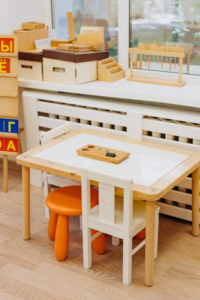
What if knowing what comes next could make your child’s day feel easier? For young children, a familiar sequence of waking up, getting dressed, eating, learning, playing, and resting provides more than structure; it creates a sense of security. Daily routines for young children help make an often unpredictable world easier to understand. When children…
Read More
Have you ever noticed your child wanting to complete the same puzzle, read the same book, or practice the same activity again and again? While it may seem repetitive to adults, this behavior plays an essential role in healthy development. In Montessori education, repetition in early childhood learning is encouraged because it helps children build confidence,…
Read More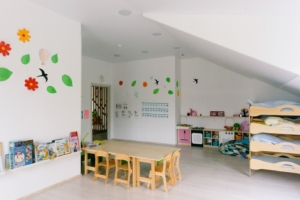
For adults, the entryway is a place to drop keys and hurry inside. For young children, it is a major transition point. Shoes come off, coats move, bags need a home, and everyone may be rushing. When the space is too tall, cluttered, or unpredictable, children can feel overwhelmed. Learn why using classroom design at…
Read More
If your toddler melts down because the blue cup is in the wrong place or bedtime happens out of sequence, it may feel confusing. However, Montessori education sees this behavior differently. Maria Montessori described early childhood as a sensitive period for order, when children crave predictability because it helps them understand the world. Understanding your toddler during…
Read More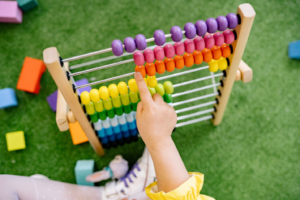
In many classrooms, math begins with paper, pencils, and memorized facts. In Montessori classrooms, it begins with the hands. Children count beads, build rods, group golden units into tens, and exchange ten tens for one hundred. This is concrete learning in action. Before a child is asked to solve an equation, they experience what numbers mean.…
Read More
Have you ever walked into a traditional early childhood classroom and felt instantly overwhelmed by the wall-to-wall bright posters, plastic toys, and loud music? For a child with sensory sensitivities, that everyday classroom setup can feel like a sensory minefield. In 2026, as early screening and developmental awareness continue to improve, families are actively…
Read More
We live in an era where data is currency and digital tracking begins before a child even steps into a classroom. In 2026, many parents are pushing back against “sharenting”, the practice of documenting every childhood milestone, tantrum, and funny face online. As the first generation of heavily photographed internet kids enters adulthood, families are…
Read More
In an era where digital-first education is becoming the norm, a surprising trend is taking hold of the 2026 parenting world: a return to the physical. While virtual reality and tablets are often marketed as the future of learning, many parents are noticing a side effect: shortened attention spans and a lack of deep focus.…
Read More